
Unpenji Temple – Temple No. 66 of the Shikoku Pilgrimage
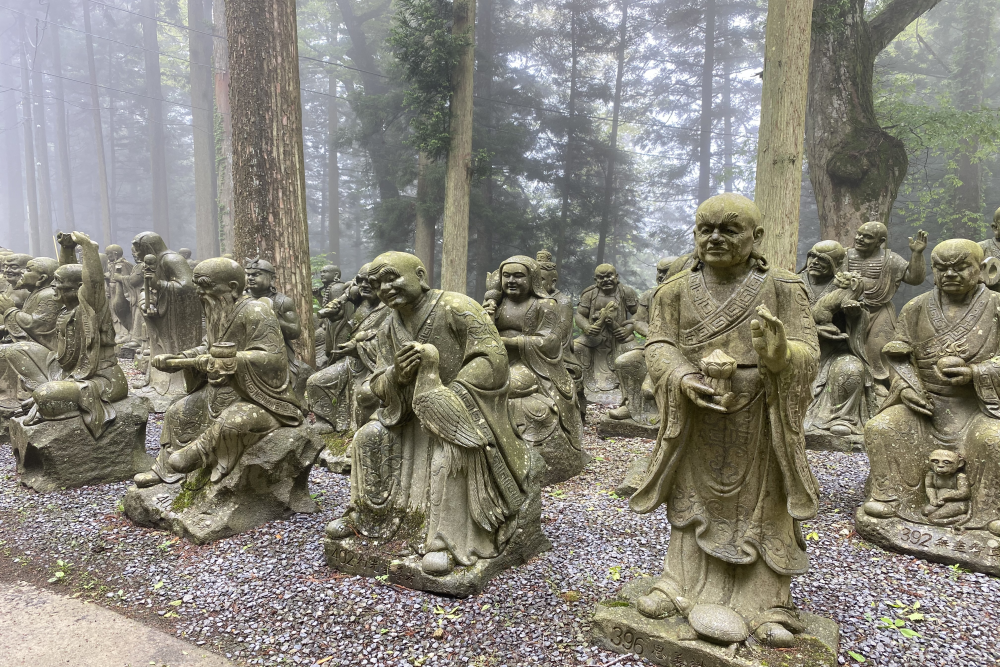
A Temple Above the Clouds with Panoramic Views of Shikoku
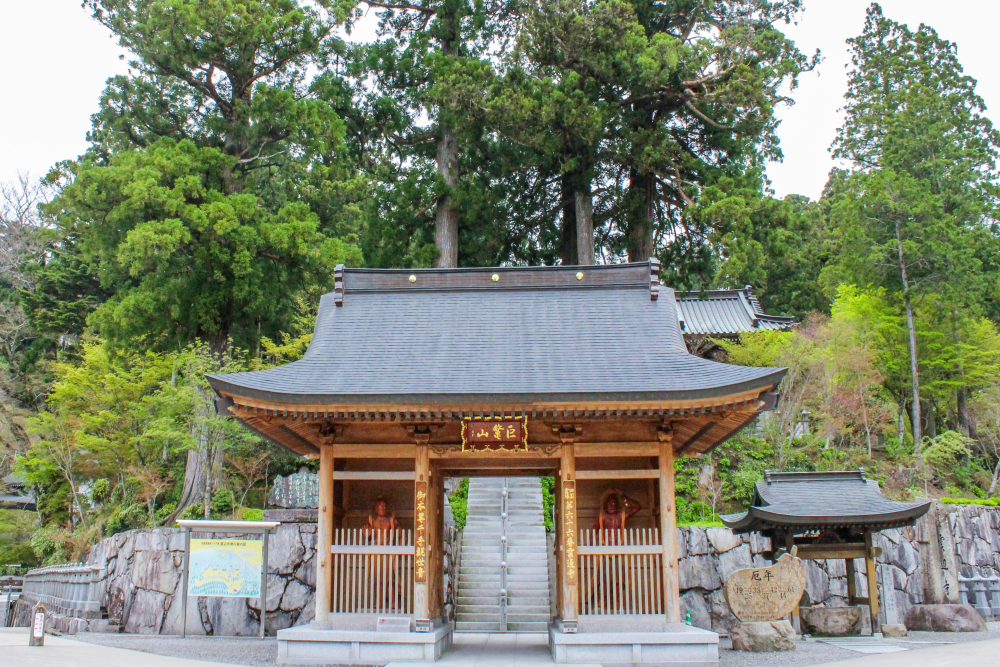
Unpenji Temple, the 66th temple on the Shikoku Pilgrimage, was founded in 789 by Kobo Daishi (Kukai) when he was just 16 years old, approximately 1,200 years ago. Situated at an elevation of 911 meters, it is the highest temple on the Shikoku Pilgrimage and is also known as the "Koyasan of Shikoku."
True to its name, which means "temple at the edge of the clouds," Unpenji is sometimes shrouded in clouds, while at other times visitors can enjoy views of a sea of clouds. The scenery changes with the weather and time of day.
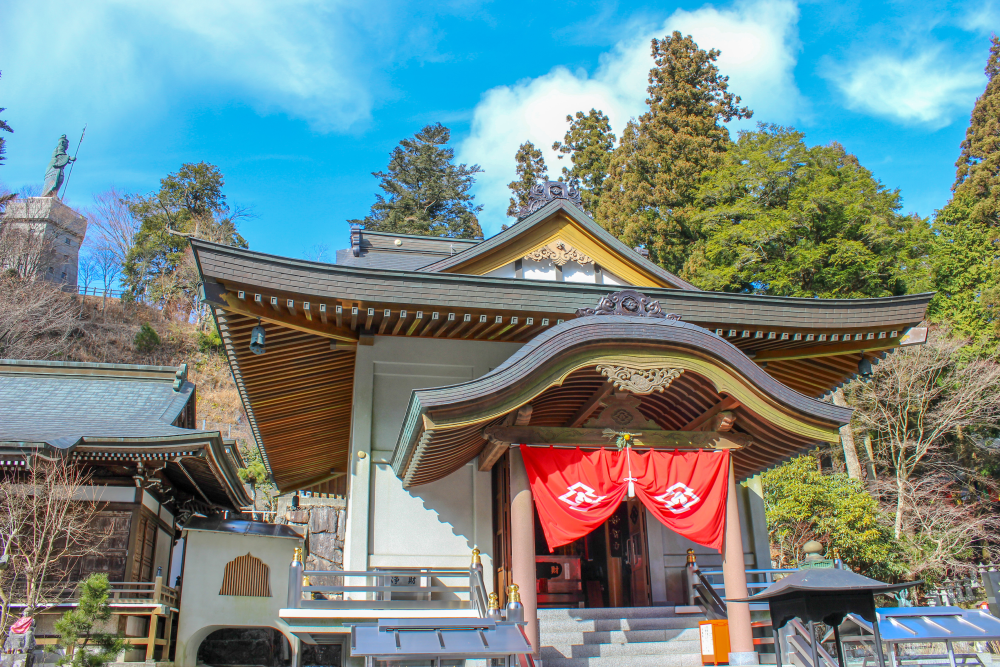
The temple's principal image is a seated statue of the Thousand-Armed Kannon Bodhisattva, flanked by standing statues of Bishamonten and Fudo Myo-o. All three are designated National Important Cultural Properties and are kept hidden from public view.
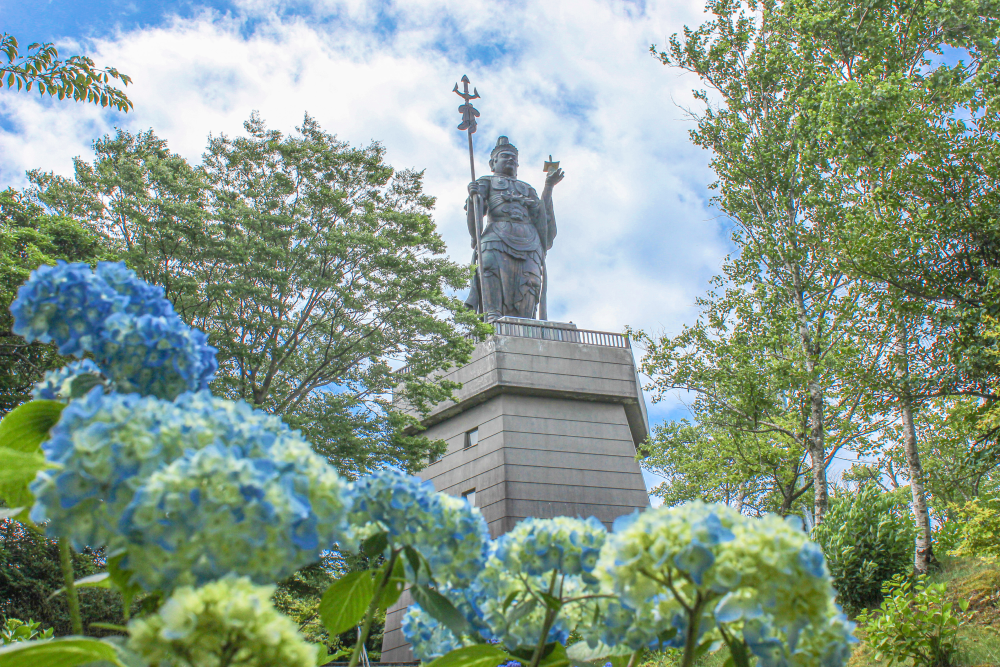
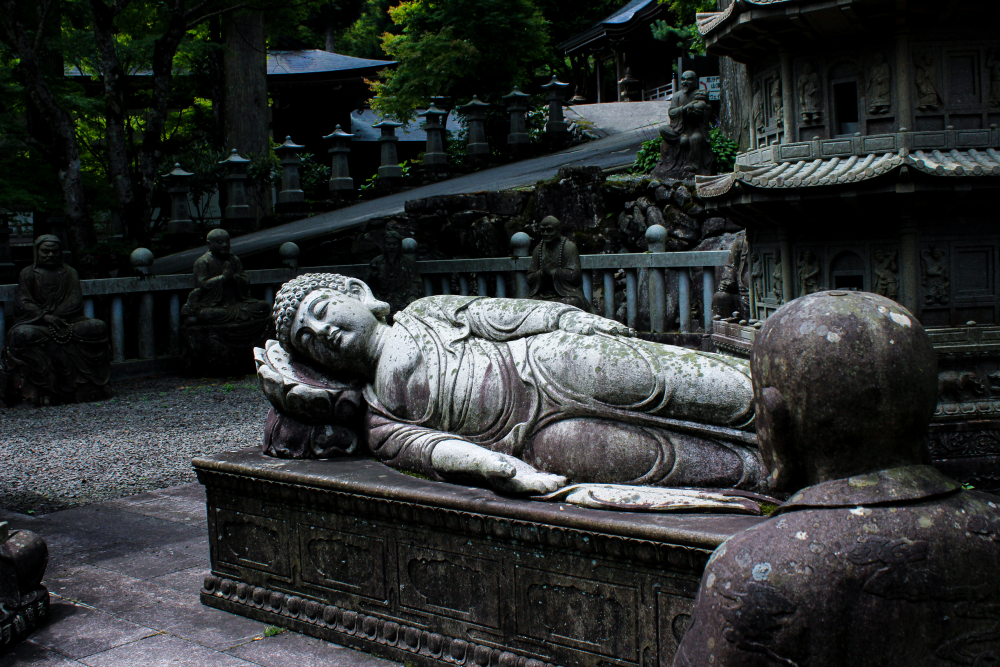
The temple grounds offer plenty to see, including 500 life-size statues of enlightened Buddhist practitioners known as rakan, a reclining Buddha statue, and the Bishamonten Observation Hall, which features a 10-meter-tall, 15-ton bronze statue of Bishamonten modeled after the temple's own statue.
The temple attracts many pilgrims and visitors during hydrangea season from late June to mid-August and autumn foliage season from late October to mid-November.
-
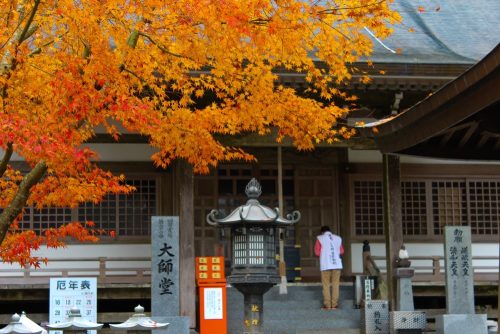 Pilgrims visiting the Daishi Hall amid the autumn foliage
-
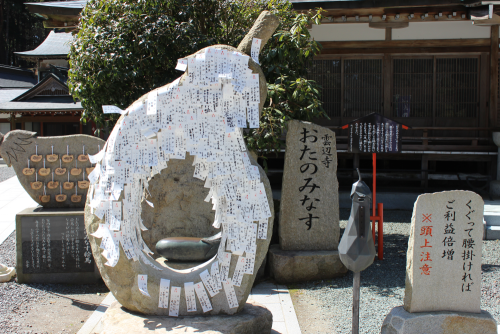 The "Otanominasu," where it is said that wishes come true if you sit and make a wish
- 特徴
- Shrines & Temples
- Address
- 763-2 Hakuchi, Ikeda-cho, Miyoshi, Tokushima (徳島県三好市池田町白地763-2)
- Phone
- 0883-74-0066
- Hours
- 8:00am-5:00pm
- Closed
- Open daily
- Parking
- Approximately 400 spaces at the Unpenji Ropeway base station
- Additional
Information - The temple is located next to Unpenji Summit Park, home to the Swing in the Sky
【Access】
Approximately 15 minutes by car from the Onohara Interchange on the Takamatsu Expressway, followed by a 7-minute ropeway ride.
*There is also a parking lot for temple visitors near the summit of Mt. Unpenji, but the mountain road is steep and difficult to navigate, so taking the ropeway is recommended.